Let's be real about orgasm timing
One of you climaxes in five minutes. The other needs fifteen, twenty, sometimes thirty. Neither of you is broken. You're just wired differently. And yet somehow this fundamental mismatch creates a low current of tension that neither partner talks about directly. One feels rushed. One feels inadequate. Both feel vaguely disappointed.
This is not a niche problem. In my practice, orgasm timing mismatches rank in the top three relationship frictions couples bring into sessions. The weird part? Most couples spend years treating it like a personal failure instead of a logistical puzzle that has a solution.
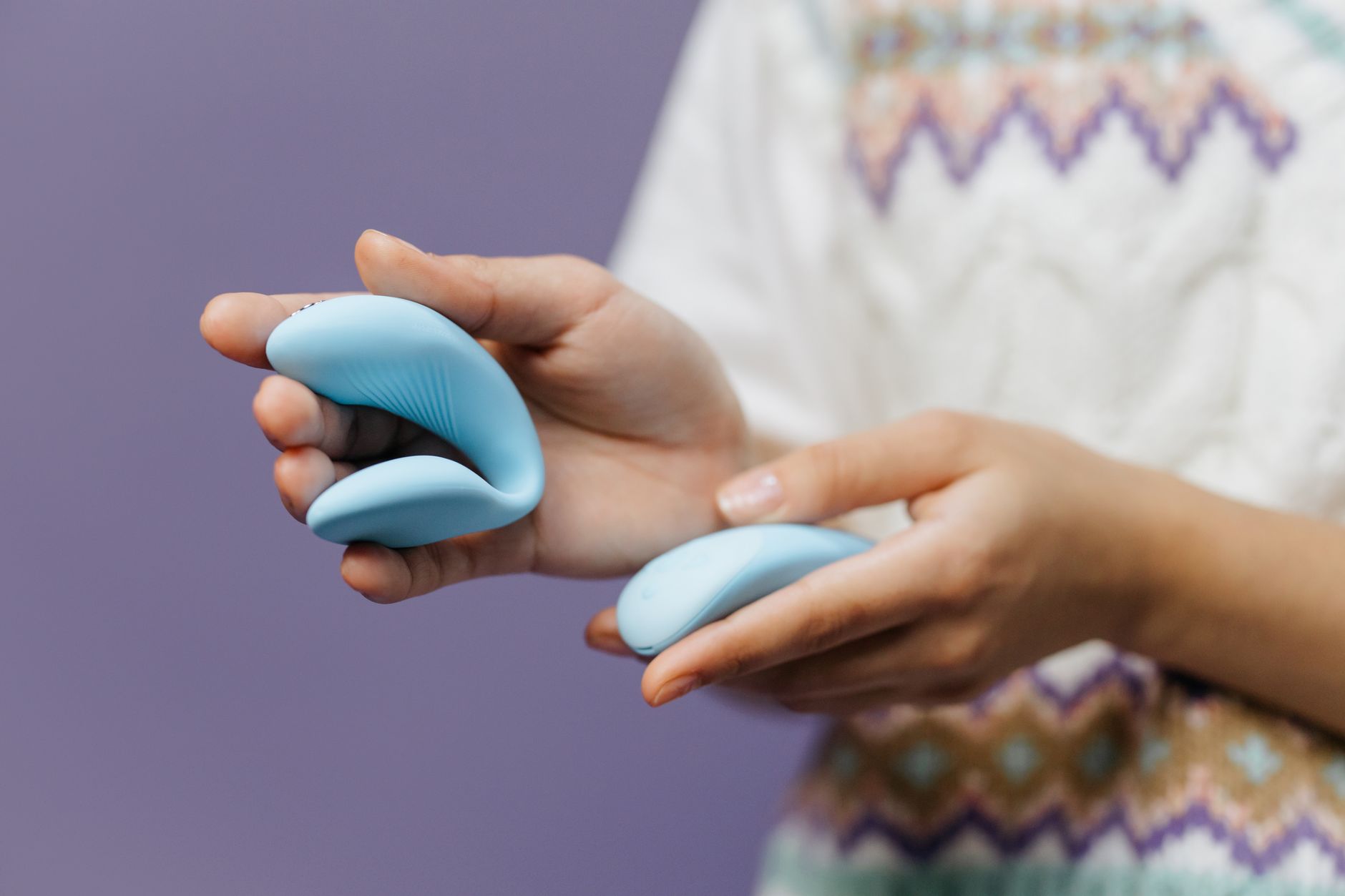
Lemon clitoral vibrators are one of the most effective tools for solving it. Not because they're magic, but because they separate the two timelines into independent variables. Here's how that works, and why it actually fixes the underlying dynamic.
Why timing mismatches happen in the first place
Orgasm speed is not about effort or attraction. It's about neurology, hormones, and how your particular nervous system responds to stimulation.
Some bodies respond quickly to pressure and rhythm. Others need prolonged, subtle buildup. Some brains need distraction and movement. Others need total focus. Partner A might climax fastest during thrusting. Partner B might need clitoral stimulation that looks completely different.
When you try to sync two different timelines using one activity, someone always feels compromised. The faster partner suppresses or distracts themselves. The slower partner feels watched, pressured, or self-conscious about taking "too long." Both leave the interaction with a small sting of resentment, even if it's not voiced.

Photo by cottonbro studio on Pexels
How lemon vibrators change the equation
A lemon clitoral vibrator works on a totally different timeline than partnered penetration. That separation is the entire point.
Here's the practical shift: instead of trying to coordinate two bodies reaching climax simultaneously through the same activity, you introduce a second source of stimulation that operates independently. Partner A can still be doing what gets them there in five minutes. Partner B can use a lemon vibrator at their own pace and intensity, reaching orgasm on their own timeline.
The key difference: this doesn't feel like one person is "left out" or "finishing alone." You're still touching, still connected, still focused on each other. You've just added a tool that lets both bodies work at their natural speed.
Many couples report that this actually increases intimacy because the pressure lifts. Nobody's performing. Nobody's suppressing. Both of you get to feel good without compromise.
Three practical setups that actually work
Setup one: The warm-up play. Start together. One partner uses a lemon vibrator for clitoral stimulation while the other provides other forms of touch—kissing, caressing, oral sex. This gives the faster partner something different to focus on while the other person builds arousal at their own pace. By the time you transition to partnered penetration, you're much more in sync. The faster partner isn't climbing toward climax as urgently because they've already had quality stimulation. The slower partner has had time to build without pressure.
Setup two: The independent finish. You start partnered sex as usual. As one partner approaches climax, they keep going and finish. The other partner then uses a lemon vibrator while their partner provides manual stimulation, oral sex, or just stays connected through touch. Nobody stops. Nobody waits awkwardly. The tempo just shifts to what works for body number two.
Setup three: The parallel timeline. Both partners climax at the same time, but through different stimulation. Partner A is using penetration. Partner B is using a lemon clitoral vibrator at the same time. You're both racing toward the same finish line, but you're each running your own race. This actually works better than you'd think because the vulnerability of simultaneous orgasm is still there—you're both letting go at the same moment—but without the mechanical impossibility of making two different bodies peak through identical stimulation.
Why lemon vibrators specifically solve this better than other toys
Lemon clitoral vibrators use suction and pulsation rather than direct vibration. This matters because it changes the orgasm pathway.
Traditional vibrators can feel intense quickly, which sometimes pushes the faster partner into climax even sooner. Lemon's suction-based design lets you control intensity more finely. You can sit at pattern 2 or 3 for a long buildup, or shift to pattern 5 or 6 for a faster finish. The slower partner has agency. They're not at the mercy of a fast-ramping stimulation curve.
The suction design also means the stimulation pattern is sustained rather than reliant on speed. That's actually closer to how some bodies naturally build toward orgasm—through consistent pressure rather than escalating intensity.
For couples specifically, that control means less guesswork. The faster partner isn't wondering "should I slow down, should I keep going, is my partner close?" The slower partner isn't feeling watched or rushed. You've both outsourced the timing problem to a tool that lets each person work at their own pace.
The conversation you actually need to have
Introducing a tool is the easy part. The harder part is naming the elephant that's been in the room all along: you have different orgasm needs, and that's been making you both feel bad.
Here's what I recommend saying: "I've noticed we finish at really different paces, and I think that's been stressing both of us out. I want us both to feel good without pressure. I'm thinking we could try using a lemon vibrator to let us each do what works for our body. Are you open to trying that?"
That's it. You're not saying "you take too long" or "I finish too fast." You're naming the friction and offering a tool.
The most common response I hear from couples is relief. Not because the tool is magic, but because someone finally said out loud that the mismatch exists and it's okay.
When this approach works best
This setup is most effective when both partners are onboard with the idea of adding a tool. If one person has resistance to vibrators in general, starting with a low-pressure conversation about why is worth the time investment.
It also works better when the two of you have already built some foundation of comfort and communication. If you're not yet talking easily about pleasure, a tool won't fix that. But if you're in a solid relationship where the timing mismatch is the main friction, this is genuinely one of the highest-ROI interventions I recommend.
For partners exploring together for the first time, introducing a lemon clitoral vibrator early actually prevents timing mismatches from becoming a problem in the first place.
The unexpected benefit
Most couples think the point is achieving simultaneous orgasm. That's nice, but it's not actually what changes the relationship.
What changes is permission. Once you've introduced a tool that lets each partner finish independently, something deeper shifts. You're both admitting that you have different bodies with different needs, and instead of seeing that as a problem to solve, you're seeing it as information to work with.
I've watched couples go from feeling vaguely resentful about timing to actually enjoying the variety of how they can come together. Some sessions focus on simultaneous pleasure. Others focus on one partner finishing while the other watches. Others shift the finish order entirely depending on mood.
The tool is the smallest part of the solution. Permission is the real thing that changes.
FAQ: Common questions about using lemon vibrators for orgasm timing
Will using a vibrator make one partner feel less needed?
Not if you frame it correctly. The vibrator isn't replacing your partner. It's giving both of you permission to work at your natural pace without one person suppressing or performing. Most couples report actually feeling more connected because the pressure lifted.
Does one partner have to stop while the other keeps going?
No. You can keep going the whole time. One person might be thrusting while the other uses the vibrator. You're both active. The tool just gives the slower partner a way to catch up without anybody having to change what they're doing.
What if we want to come at exactly the same time?
Lemon vibrators can help with that too. Start at the same moment, both building toward climax, and time your finish. Because each of you is controlling your own stimulation pathway, you actually have more control over the tempo.
Is it weird to introduce a toy this late in the relationship?
No. Most relationships go through seasons. A timing mismatch might not have been an issue early on and become one later, or vice versa. A tool that solves it now is perfect timing, not late timing.
What if one partner always finishes first and prefers it that way?
Then you don't have to do simultaneous finish. The point of the lemon vibrator is giving you options. Maybe Partner A finishes first through penetration, then stays connected while Partner B climaxes however feels best. That's equally valid.
How do we even bring this up without it feeling awkward?
Start with the specific problem, not the tool. "I've noticed we tend to finish at different paces. I want us both to feel good without pressure. What if we tried something that might help?" The tool is the solution to a problem you've both felt. You're not creating the issue by naming it. You're fixing it.
The real point
Orgasm timing mismatches aren't a sign that something is wrong with your relationship or your bodies. They're just information about how you're wired differently. A lemon clitoral vibrator gives you a way to work with that difference instead of against it.
The couples I see who use this approach stop treating their different bodies as a source of low-level tension and start seeing them as variety. That shift in perspective is almost always the bigger win than the actual mechanics of how you're coming together.
If you're tired of the silent frustration of mismatched timing, you have options. Start with the conversation. The rest follows.