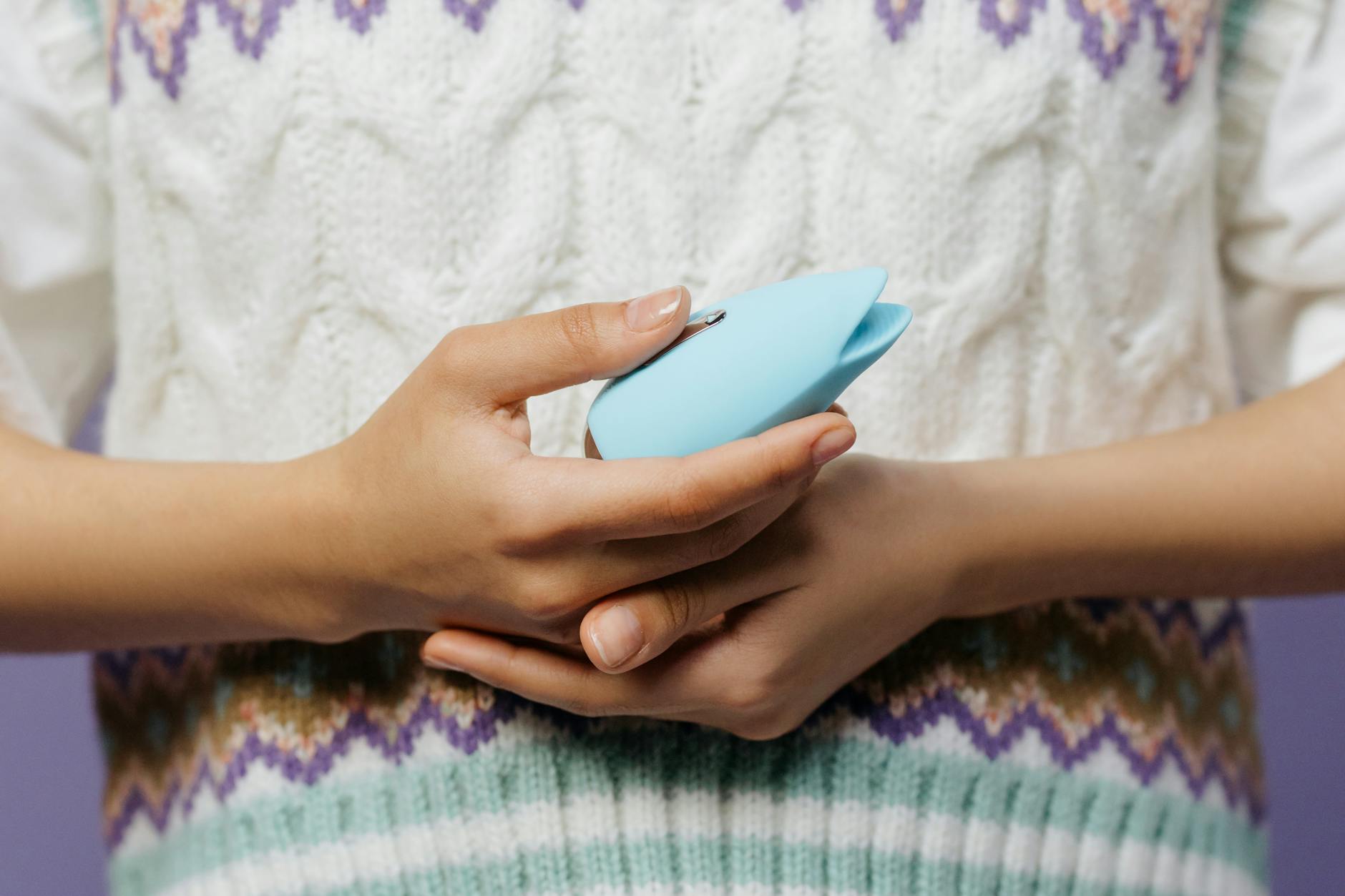
How Lemon Vibrators Help When Your Partner Has Sensitivity Issues
Your bodies are different. That's not a problem. Here's how lemon clitoral vibrators create pleasure for both of you when one partner's sensitivity is higher or lower than the other.
Here's the thing: most conversations about shared pleasure assume both partners have roughly the same arousal threshold. One person is 40 on the intensity dial, the other is 45. Easy math. But real life is messier. Maybe one partner goes numb with friction after a few minutes. Maybe the other finds standard vibrators too intense. Maybe they used to match perfectly and now they don't.
It's not random. Three main culprits shift how bodies respond:
Physiological differences. Some people are born with denser nerve endings in their clitoris, or a lower threshold for stimulation. Others need more pressure to reach the same sensation. These aren't character flaws. They're just how nervous systems are wired.
Changes over time. A partner's sensitivity can shift because of medication, age, hormones, or simple repetition. The friction that felt amazing at 25 might feel too much at 40. The stimulation that did nothing last year might sing now. Bodies don't stay still.
Different baseline arousal states. One partner might be touching down after 10 minutes of warm-up. The other needs 25 minutes to be ready. One person walks in already half-aroused from the day. The other is starting from zero. Synchronizing timing is harder than it sounds.
The real problem isn't the mismatch itself. It's trying to solve it with the same tool.
This is where lemon clitoral vibrators actually change the game. Because lemon suction toys work through air-pulse stimulation instead of direct vibration, they give partners on opposite ends of the sensitivity spectrum a way to share pleasure without calibrating to the same intensity.
Here's the mechanics: a lemon vibrator (like the Lem) uses gentle suction and pulse patterns that feel completely different from a standard vibrator. The sensation is broader, more diffuse. Someone who gets overstimulated by concentrated vibration often feels fine with suction. Someone who needs deep pressure can use higher patterns without the rawness that comes with intense direct contact.
This means two people with wildly different sensitivity thresholds can use the same toy, or toys from the same line, and both feel properly stimulated. No compromise. No "is this working for you" checks every 30 seconds.
Before you introduce lemon vibrators into shared pleasure, the conversation matters more than the tool. Here's how I usually guide couples through it.
Start with curiosity, not defensiveness. "I've noticed we respond differently to stimulation. I want to find something that works for both of us" lands better than "You're too sensitive" or "I need more than you give me." The first is collaborative. The second feels like criticism.
Then get specific. What actually happens? Does one partner feel discomfort? Does the other not feel enough? Does the session end because one person tips into overstimulation while the other is still ramping up? Name the actual bottleneck, not the person.
Finally, frame lemon vibrators as a tool for togetherness, not a workaround. "I want us to explore this together" is honest and inviting. Slipping it in without context reads as avoidance.
When you're shopping for a lemon clitoral vibrator with a sensitive partner (or for sensitivity mismatches within the partnership), think about pattern variety, not just intensity.
A toy with a broad range of patterns gives you more flexibility than sheer power. One partner might love the sustained pulse at level 2. The other might need the faster rhythm at level 5. Same toy. Completely different experiences. This is why lemon suction vibrators work so well. The pulse patterns can be adjusted without the sensation becoming mechanically painful for someone with higher sensitivity.
Also consider duration. Many partners find that switching off who's being stimulated works better than simultaneous contact. One person uses the Lem, their partner uses touch or penetration. Then you swap. This removes the pressure to maintain synchronized arousal and lets each body dictate its own pace.
There's a difference between "I'm less sensitive" and "Direct contact hurts." If either partner experiences pain or irritation during shared pleasure, pause and explore why. Sometimes it's technique. Sometimes it's a physical condition like vulvodynia or dermatitis.
Lemon vibrators can actually help here because suction stimulates differently than friction. Someone who can't tolerate vibration on sensitive tissue might find lemon suction completely fine. It's one reason the Lem has become a go-to for partners with vulvodynia or high sensitivity.
But if pain persists, see a healthcare provider. A gynaecologist or sex therapist trained in pain can rule out conditions that need treatment separate from any toy.
Honestly, the sensitivity mismatch often gets worse when couples make it into a performance metric. "If my partner needs more stimulation than I do, am I not enough?" This is the story I hear most often, and it's almost never true.
Your bodies are different. One of you might have a higher pleasure threshold. The other might get overstimulated faster. Neither makes you less desirable. They just mean you need to collaborate on technique instead of defaulting to what used to work.
Lemon vibrators help because they make this collaboration visible. You're not competing for the same sensation. You're each getting exactly what your nervous system needs. That shift in perspective is often bigger than the physical change.
The goal isn't for both of you to feel the same thing. It's for both of you to feel satisfied.
If you're new to this, here's a simple starting point. Start with 10-15 minutes of non-goal-oriented touch. Hands, lips, whatever feels good. No pressure to escalate.
Then introduce the lemon vibrator. One partner uses it on the other. Start at a lower pattern and work up based on feedback. Communication here is key. "More intensity?" "Should I stay here or move?" "Does this feel good?" beats assuming.
Once you've figured out what works for the receiver, offer the toy to the other partner. Let them guide intensity based on their own threshold. Different patterns, different pressures, all valid.
The whole goal is removing the mental load of "Am I doing this right?" and replacing it with "What does my body want right now?"
If the sensitivity mismatch is creating real tension in your relationship, or if one partner feels consistently unsatisfied, a sex therapist or relationship coach can help you dig deeper. Sometimes sensitivity issues are a symptom of something else. Resentment. Avoidance. Unresolved conflict about intimacy more broadly.
A good therapist (preferably someone trained in the Gottman Method or Emotionally Focused Therapy) can help you separate the physical issue from the relational one. That clarity alone often solves half the problem.
Start with lower pattern speeds and shorter sessions. Lemon clitoral vibrators allow you to dial in intensity more gradually than standard vibrators because the sensation is diffuse. You can also alternate who receives stimulation rather than using it simultaneously. This removes the pressure to maintain shared arousal and lets your partner's nervous system set the pace.
Often, yes. Many people who dislike traditional vibrators respond well to lemon suction stimulation because the sensation is fundamentally different. It's broader, less intense, and doesn't create the same numbness from sustained friction. If your partner has been avoidant about toys, this might be worth exploring together without pressure.
Ask yourself: does your partner respond well to your touch in other contexts? Do they seem present and engaged during sex, just with different thresholds? If yes, it's likely a body difference. If your partner seems avoidant, checked out, or resentful, the sensitivity issue might be a symptom of relational distance. That's worth addressing separately.
Completely. Suction stimulation feels genuinely different from vibration. Some people need a few sessions to adjust. Give it two or three tries before writing it off. The "weird" feeling often becomes the preferred feeling once the nervous system recognizes it as safe.
Then the sensitivity mismatch might not be the real issue. Sometimes couples use sex problems as a proxy for deeper relational issues. Resentment about household labor, unresolved conflict, or emotional distance often shows up as sexual friction. If introducing new tools doesn't help, talking to a couples therapist can help you identify what's actually at play.
Frame it as exploration, not correction. "I want us to try something that might feel better for both of us" is collaborative. "You're too sensitive" or "I need you to be more aroused" is critical. Also normalize that bodies are different. Sensitivity variations are as common as different heights or different food preferences. No shame attached.
Sensitivity mismatch in couples is one of the most solvable intimacy problems. It just requires you to stop thinking of pleasure as a one-size-fits-all experience. Your bodies are different. Lemon vibrators and other tools let you honor those differences instead of fighting them.
The couples I work with who navigate this best aren't the ones with perfectly matched sensitivity. They're the ones who got curious about what works instead of defensive about what doesn't. Tools like lemon clitoral vibrators make that curiosity easier.
If you want to explore this further with your partner, a conversation with a relationship coach can help you build a foundation of communication around pleasure. The tools matter, but the conversation matters more.