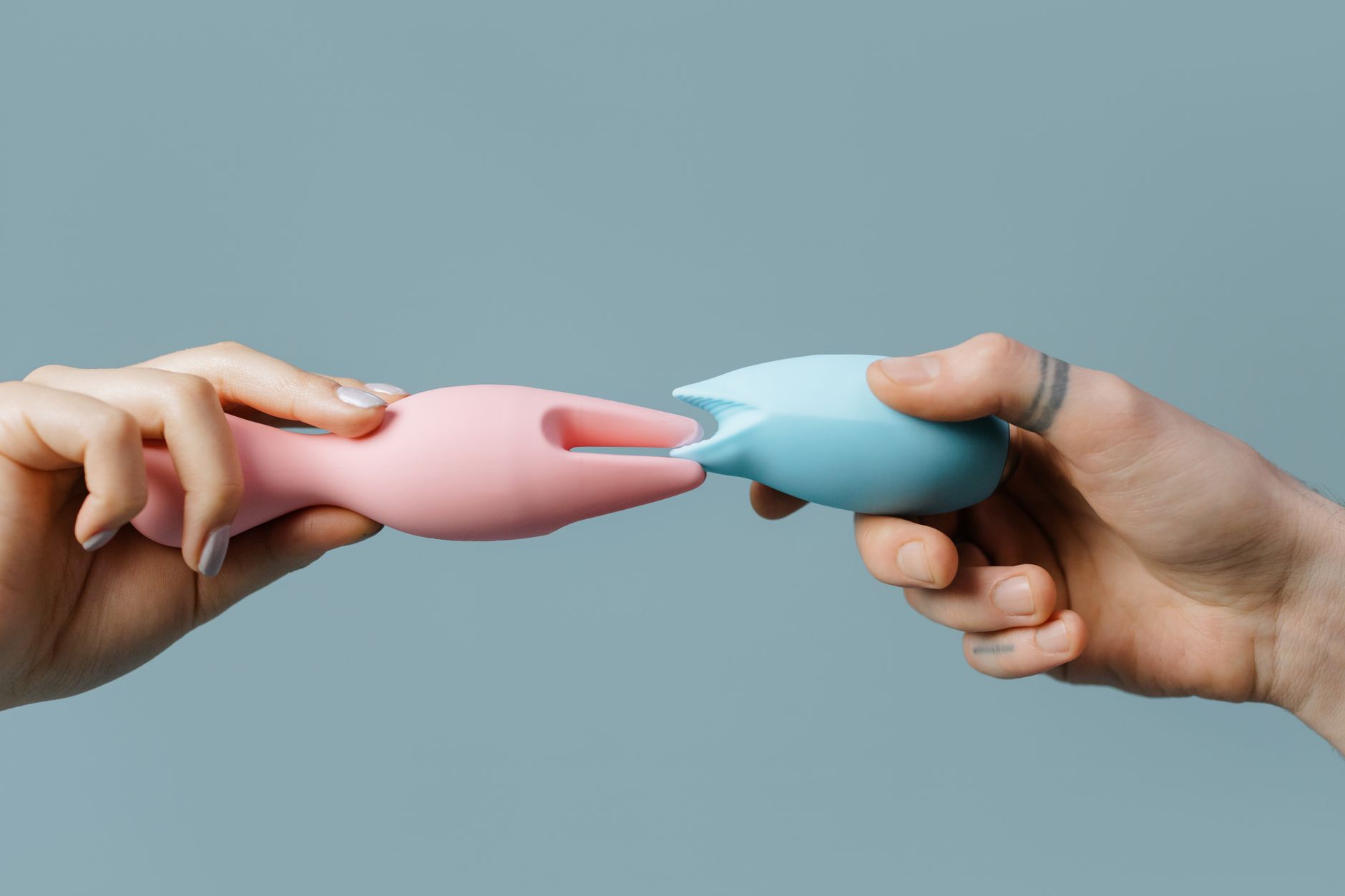
Your partner comes. Then there's this awkward pause where they're satisfied and you're still there, mid-climb. The options feel terrible: rush to finish (kills the mood), keep going alone (weirdly lonely when they're right there), or let it go (breeds resentment). None of those work.
This is one of the most common timing problems in long-term partnerships, and it's rarely about dysfunction. It's about biology colliding with expectations. Here's the fix.
Bodies are wildly different. People with vulvas typically take longer to reach orgasm, especially during partnered sex. Partners with penises often finish faster, particularly early in a sexual encounter. That gap isn't a problem until you frame it as one.
The real issue starts when that gap creates performance pressure. You feel like you're taking too long. Your partner feels like they failed to get you there. The whole thing becomes about fixing something that's not actually broken. It's just logistics.
Here's what actually helps: acceptance plus tools. Lemon vibrators handle the logistics so you can both relax into it.
When your partner finishes, the moment doesn't have to be the end of partnered pleasure. A lemon clitoral vibrator lets you stay engaged with them while getting what you need.
The suction pattern on a lemon vibrator works faster and more directly than most other stimulation methods. You're not relying on another person to hit the exact angle and pressure at exactly the right rhythm. You're in control. That speeds things up and removes the performance anxiety for both of you.
Your partner can stay present. They can hold you, kiss you, watch you, talk to you. None of that stops just because they finished. The vibrator does the mechanical work while you two maintain the connection.
Timing matters here. Introduce the vibrator before your partner reaches orgasm, not after. This feels counterintuitive, but here's why: if you start using it only once they're done, it feels like pivoting away from them. If it's already part of the shared experience, it feels integrated.
Talk about it beforehand. "I want to use a lemon vibrator during sex sometimes. Not because anything's wrong, but because it helps me get there without pressure." Most partners are relieved. They get to finish and still be part of your pleasure. No performance anxiety for either of you.
When you're actually in the moment, here's the rhythm that works best: start with lower intensity (patterns 1-3 on a lemon clitoral vibrator). You're already warmed up from partnered contact, so you don't need the full power. This also means you can build to orgasm naturally rather than jumping straight to maximum stimulation.
Your partner doesn't have to leave the bed or the moment. They can keep touching you, kissing you, or just staying close. The vibrator handles one job. The partnership handles the rest.
The suction mechanism on lemon vibrators is different from traditional vibrators. Instead of moving against tissue, suction pulls gently on the clitoris. This creates sensation without the friction that can feel too intense or numb-making during long sessions.
The intensity ramps quickly. You go from background pleasure to orgasm in about 5-10 minutes, depending on your body. That means your partner doesn't have to stay still for ages while you finish. The whole thing stays intimate without feeling drawn out.
Lemon vibrators are also quiet and compact. There's no awkward buzzing noise that kills the mood. You're not fumbling with something huge. It fits in your hand, they fit in the moment.
If lubrication is an issue for you, lemon vibrators work well without it, though water-based lubricant enhances sensation. Unlike friction-based toys, the suction mechanism doesn't require constant slickness to feel good.
The conversation matters as much as the tool. Don't frame it as solving a "problem." Frame it as trying something new together.
"I've been thinking about trying a lemon vibrator during sex. I think it would help me relax instead of worrying about how long I'm taking. And honestly, I like the idea of you being part of that rather than checking out once you finish."
That's it. Most partners respond well. They're not being replaced or put on the sidelines. They're being invited into something that actually works for both of you.
If your partner seems hesitant, ask why. Sometimes it's anxiety about inadequacy. Sometimes it's uncertainty about how it works. Sometimes they think toys mean the relationship is in trouble. None of those are true, and a quick conversation usually clears it up.
Once you normalize using a lemon vibrator during partnered sex, something shifts. Sex stops being a performance where both people have to reach orgasm at the same moment through the same method. It becomes something you're building together, using whatever tools actually work.
That's genuinely good for long-term partnerships. You're not pretending your bodies work the same way. You're working with what's actually true and enjoying each other while you do it.
Your pleasure matters. Your partner's pleasure matters. A tool that lets both of you get there without tension or awkwardness isn't a band-aid. It's actually smart design.
Not if you frame it right and they stay engaged. The vibrator is doing one job. Your partner is doing everything else. They're still kissing you, touching you, looking at you. The vibrator isn't replacing intimacy. It's enabling it without performance pressure. Most partners appreciate this hugely.
It works better if you start using it before they reach orgasm, so it feels integrated rather than like a consolation prize. You can warm up together, they might finish first, and then you continue with the vibrator while they stay close. The transition feels natural instead of jarring.
It varies, but typically 5-15 minutes depending on your arousal level and the intensity setting. Start at lower patterns (1-3) and work up if you need to. Your body will guide you. The suction mechanism is efficient without being aggressive, so you're not rushing but you're not waiting forever either.
Talk before you get intimate. Let them know the vibrator is about removing pressure from both of you, not about them being inadequate. Most anxiety comes from not understanding the goal. Once they see it's about mutual pleasure, not replacement, they usually feel better.
No, but it helps. The suction mechanism works without additional lubrication, which is one reason lemon vibrators are great for people whose bodies don't produce enough natural lubrication. A small amount of water-based lube can enhance sensation if you want it, but it's optional rather than required.
If it works for both of you, absolutely. Some couples use it every time. Others use it sometimes. The point is that you're both comfortable and it actually serves your pleasure. There's no rule. Do what makes sense for your bodies and your partnership.