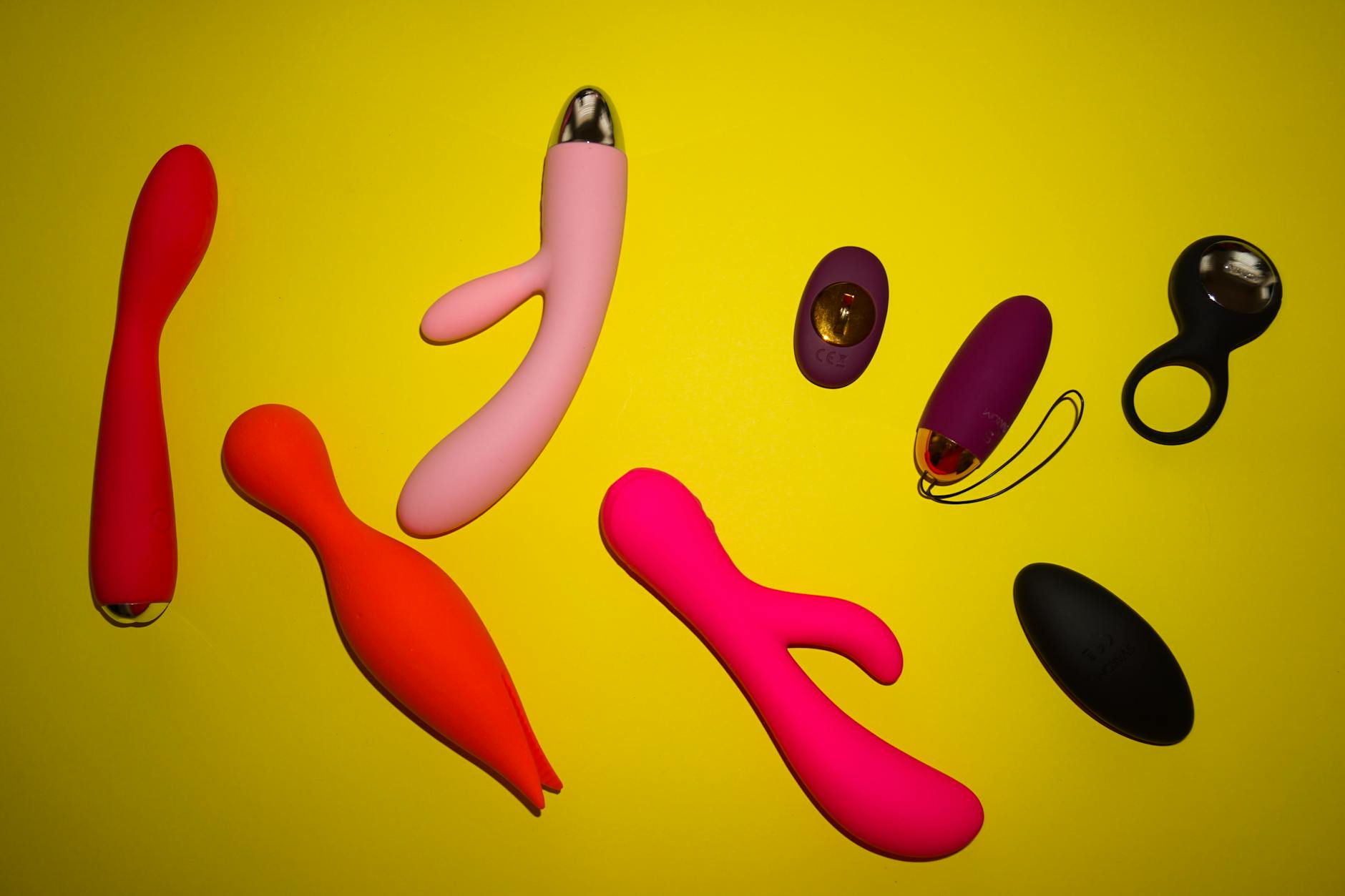
Desire doesn't die in emotional distance. It just goes quiet.
Something shifts when a couple stops really connecting. You might not fight. You might not even talk about it. But somewhere between the everyday logistics and the unspoken tension, sex becomes something you're avoiding rather than something you're pursuing. And then, sometimes, through work or therapy or just time, that distance starts to close. The air clears. And suddenly you're both wondering: how do we actually come back to this?
The tricky part isn't that desire is gone. It's that it's unfamiliar now. Your body and your partner's body might feel like territory you haven't properly explored in years. And there's often a weird mix of wanting connection and also feeling defensive or uncertain.
That's exactly where lemon clitoral vibrators can help—not as a bandage, but as a tool for rebuilding touch on your own terms.
Why lemon vibrators matter when you're starting over
When emotional distance closes and desire returns, you're in a specific situation: you need pleasure to feel safe, and you need to feel safe to have pleasure. That's not a contradiction—it's a requirement.
Lemon vibrators, especially the suction-style design that draws blood gently to the clitoris, create a specific kind of sensation that bypasses some of the mental friction that comes with rekindling. Here's why they're uniquely helpful during this phase.
First, suction stimulation is controlled entirely by you. Unlike a partner's hand or mouth, you set the rhythm, the pressure, the intensity, and the timing. That autonomy matters enormously when trust is rebuilding. You're not negotiating sensation in real time with someone else. You're establishing what feels good on your terms, then sharing that clarity with a partner later.
Second, suction feels different neurologically than direct friction. When emotional distance has made traditional sex feel fraught or overstimulated, many people find that suction creates a sensation that's intense but less invasive. It's focused on the external clitoris without the vulnerability of direct touch.
Third, a lemon sucker—that small, unassuming device—is almost comically low-pressure as an object. There's no performance narrative attached to it. You're not doing this for a partner. You're doing it for yourself, which matters when desire is fragile.
The emotional setup is half the game
Here's what I see in practice: when couples are rebuilding intimacy after emotional distance, the ones who move forward fastest are the ones who deliberately separate self-pleasure from partnered pleasure at first.
What this means is not "go masturbate instead of having sex with your partner." It means spending 2-4 weeks rebuilding your own sense of what feels good, solo. Using a lemon clitoral vibrator, testing different patterns, noticing what your body actually wants when there's zero performance pressure.
Why? Because emotional distance often means you've stopped checking in with your own desire. You've been in negotiation mode so long that you don't actually know what arouses you anymore. You think you do, but it's often a memory of what used to work, or what you assume should work.
Using a lemon vibrator solo gives you real data. It reintroduces you to your own pleasure. And paradoxically, that makes partnered sex less fraught later, because you're not arriving at sex hoping your partner will figure you out. You already know what turns you on.
How to start: the practical steps
If you're in this situation, here's the progression I recommend to my couples.
Week 1-2: Solo exploration, no pressure. Use a lemon clitoral vibrator on settings 1-3, 15-20 minutes, whenever you feel like it. The goal is zero performance. You're not trying to come. You're not trying to prove anything. You're just reacquainting yourself with sensation. Many people find that this alone—just regular solo pleasure time—softens the tension in a relationship because you're not carrying resentment into partnered sex.
Week 2-3: Begin talking about it, without showing. You might say, "I've been exploring solo, and I'm noticing that I like [specific sensation] more than I thought." This is crucial information for a partner to know because it removes guessing from the equation.
Week 3-4: Introduce it into partnered foreplay, starting with non-sexual context. You might use a lemon vibrator while your partner is beside you, kissing your neck, not touching the vibrator. The combination of your own controlled sensation plus their affection can feel revelatory because it's intimate without being invasive.
Week 4+: Integrate it into sex as a tool. Some couples find that using a lemon clitoral vibrator during penetration speeds up arousal and removes some of the pressure around timing. Others find that using it while receiving oral sex creates a completely different sensation than either alone.
What to avoid when you're rebuilding
Don't use a lemon vibrator to try to force desire if it's genuinely not there yet. A vibrator is not a relationship repair tool. If the emotional distance is still present—if you're still not talking, still resentful, still guarded—a vibrator won't bridge that. It'll just be an awkward reminder of the distance.
Don't surprise your partner with it during sex. If you've been distant, trust is the operating currency right now. Using a lemon vibrator should be a conversation first, a trial second, then integration third. Not a shock.
Don't assume your partner understands what you're doing. Say it explicitly. "I'm using this to explore what feels good, and I want to know what feels good so that when we're together, I'm present instead of in my head." Context prevents misinterpretation.
Don't measure success by orgasm. When you're rebuilding intimacy, an orgasm is a nice bonus. Connection is the goal. I've worked with couples who used lemon vibrators as part of foreplay for months without anyone actually climaxing, and the intimacy that built from that was profound. Don't let orgasm be the bar.
The conversation to have with your partner
If you're planning to incorporate a lemon clitoral vibrator into your rebuilding, here's how to frame it to a partner who might be unsure.
"I want to rebuild what we have, and part of that is me getting clear on what feels good for me. I'm going to use a vibrator solo for a bit, and when I feel ready, I'd like to explore that together. It's not about you not being enough. It's about both of us being intentional."
Most partners, when they understand the reasoning, become genuinely supportive. Many actually want to be included sooner than you might expect. Some couples find that using a lemon vibrator becomes a completely normal part of their sexual routine. Others use it during a specific season of rebuilding and then move on.
The key is that you're deciding together, from a place of honesty, not from a place of hiding or trying to fix something unilaterally.
When to bring in professional support
A lemon vibrator is a tool for pleasure. It's not therapy for relationship problems. If the emotional distance is tied to infidelity, unresolved conflict, or deeper incompatibility, those are conversations for a couples therapist, not a sex toy.
I recommend therapy alongside pleasure exploration when:
The distance was recent and the trust break was significant. A vibrator won't rebuild trust. Communication and time do.
You're using the vibrator to avoid difficult conversations. If you're exploring pleasure solo because you genuinely enjoy it, great. If you're doing it because you're afraid to talk to your partner, that's a sign you need support in that conversation first.
One partner is noticeably more enthusiastic about rebuilding than the other. Desire often comes back at different speeds. That's normal, but it needs honest discussion.
When reconnecting is a shared goal and both people are showing up, a lemon clitoral vibrator becomes a genuinely useful tool in the process. It's not magic. But it does put pleasure back on the agenda in a way that feels controllable and low-stakes. And sometimes that's exactly what a couple needs to remember that they actually like each other.
FAQ: Rebuilding with lemon vibrators
How long does it usually take for desire to come back after emotional distance?
There's no timeline. I've seen couples reconnect sexually within weeks of the emotional distance closing, and I've seen couples take 6-12 months. The speed depends on how deep the distance was, how well you're communicating now, and how much you both actually want to reconnect. What matters more than speed is consistency. Regular attempts at intimacy, even small ones, rebuild desire faster than occasional attempts.
Can a lemon vibrator actually help us if we're not sure we want to stay together?
No. If you're questioning the relationship, pleasure exploration should wait. You need clarity on whether you're trying to save something worth saving. If you are, then yes, a lemon vibrator can be part of that rebuilding. If you're not sure, use that time for honest conversation about the future instead.
My partner is worried that using a vibrator means I don't find them attractive anymore.
This is incredibly common, and it's worth addressing directly. Here's what I tell partners: "I find you attractive and I want to rebuild this with you. Using a vibrator is about me getting clear on what I like so I can be more present with you, not less." The research backs this up. Couples who incorporate vibrators into their sex life report higher satisfaction, not lower. It's not a replacement for your partner. It's a tool that makes sex better for both of you.
Is it better to explore solo first, or to explore together?
Generally, solo exploration first when you're rebuilding trust. It removes the performance pressure and gives you accurate data about your own body. Exploring together before you've got that clarity can feel awkward because you're both uncertain. Once you know what you like, partnered exploration feels more confident. That said, every relationship is different. If both people are enthusiastic about exploring together, that can work too. Just go slow.
What if desire comes back but it's different than before?
Expect it to be different. You're both older, you've both been hurt, you're both more aware. The desire that comes back is often quieter but deeper. People often tell me that sex after rebuilding emotional distance feels more intentional because there's less taking-it-for-granted. A lemon clitoral vibrator can help you lean into that new normal because it's not tied to "how we used to do it."
How do I know if we're actually rebuilding or just going through the motions?
You'll feel it in non-sexual contexts. Are you laughing together? Are you making plans beyond logistics? Are you curious about each other again? Sexual reconnection follows emotional reconnection. If the only thing changing is that you're having sex again, but you're still distant in daily life, you're likely going through the motions. The lemon vibrator should be part of a bigger picture of reconnection, not a substitute for it.