You're with someone new. Things are getting intimate. And suddenly there's this invisible clock ticking in your brain. They're waiting. You're taking too long. What if they get bored? What if they think something's wrong? So you rush. You fake it or you give up. And the irony is that rushing is exactly what makes pleasure impossible.
This isn't weakness or dysfunction. It's a textbook anxiety response. New partners trigger a particular kind of performance pressure because the relationship is still being evaluated. You don't yet have the safety to just be. So your nervous system locks up, arousal stalls, and the harder you try to finish, the further away the orgasm gets.
When you're anxious, your sympathetic nervous system activates. That's your fight-or-flight response. Blood redirects away from your genitals and toward your limbs and brain. Your pelvic floor tenses. Lubrication decreases. Everything that needs to happen for orgasm stops happening. Then your brain notices the lack of progress and generates more anxiety. It's a feedback loop, and the only way out is to shift your physiology, not your willpower.
The second part is psychological. Most of us grow up with the idea that sex is something that happens to us or for someone else. When you're with a partner you don't yet feel safe with, that external focus gets louder. You're monitoring their reaction, their patience, their pleasure. You're not actually present with your own body.
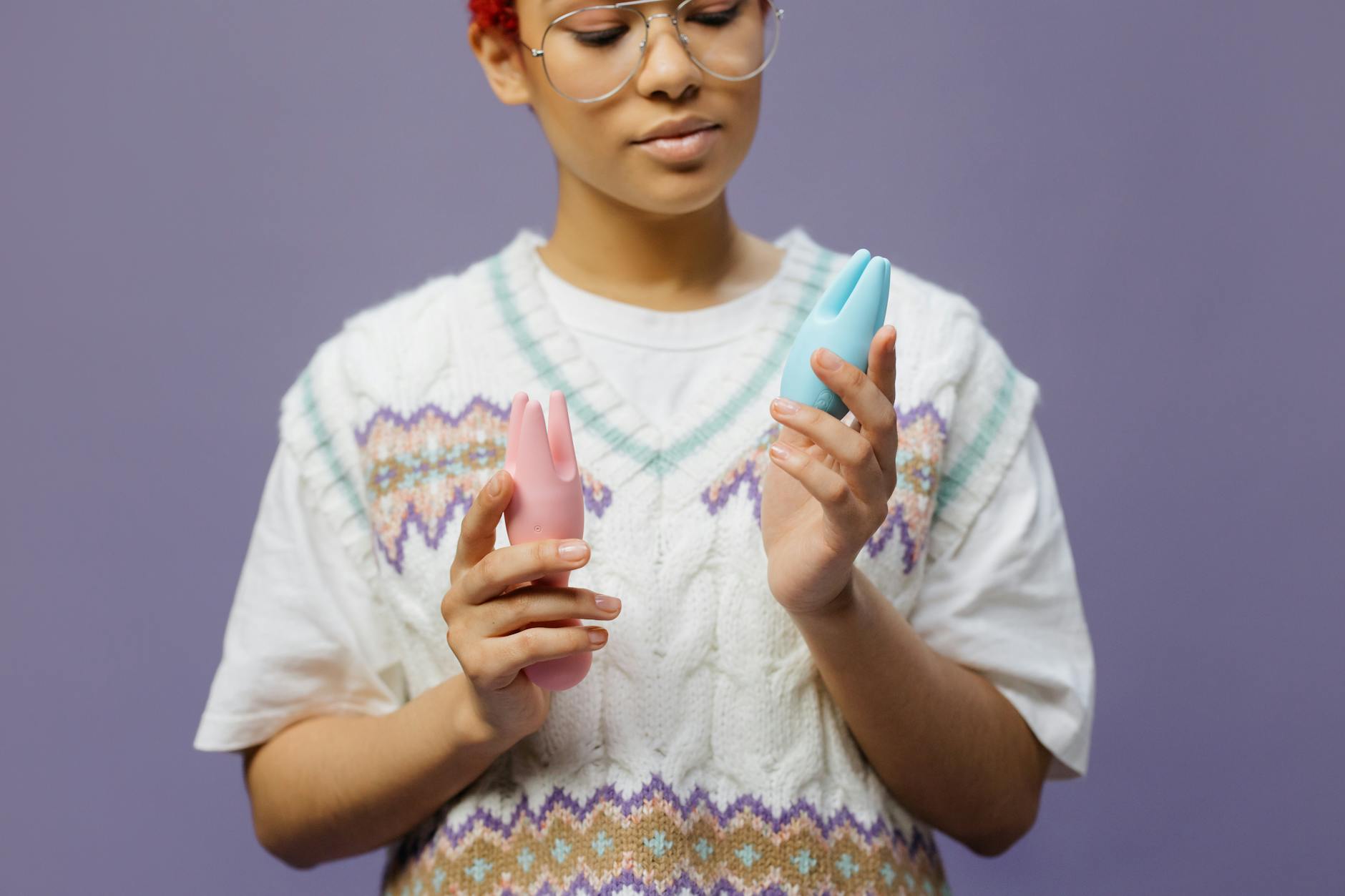
Here's what changes when you introduce a lemon clitoral vibrator into new-relationship sex. First, the vibrator is unambiguously about your pleasure. Not a bonus. Not a preliminary. It's the main event, and introducing it sends a clear signal: I'm not here to perform for you. I'm here because my orgasm matters.
Second, lemon vibrators work fast and reliably. A good lemon sucker like the Lem uses air-pulse technology to stimulate nerve endings without the intensity of direct vibration. Most people with vulvas reach orgasm in 5-15 minutes with the right device and the right headspace. That speed isn't about rushing. It's about giving your nervous system permission to relax because there's a clear path to the finish line.
Third, the vibrator creates a boundary between your pleasure and your partner's. When you're relying on manual stimulation or penetration, everything gets tangled. But with a lemon vibrator, you have a job and they have a job. You're not waiting for them to figure out what works. You're not second-guessing yourself. You're simply present with sensation.
Honestly? The introduction matters less than you think. Most new partners are relieved. They want you to finish. They want you to enjoy yourself. What they don't want is to feel like they failed.
Simple language: "I come easier with a vibrator. It's not about you. It's just how my body works." That's it. No apology. No long backstory.
If you want to make it sexy instead of clinical, frame it as something you want them to see. "I want to show you how I like it." Then use your lemon vibrator in front of them. Masturbate while they're present. Let them see your pleasure build. Most people find this incredibly hot, and it removes the pressure because you're not waiting for their hands or their body. You're independent.
If you're both nude and they want to stay engaged, they can kiss you, touch your breasts, hold you. But the clitoral stimulation is yours.
Timing helps. Use your lemon vibrator before your partner arrives if you can. Not to orgasm, but to warm up. 5-10 minutes of gentle stimulation on a lower setting lowers your anxiety baseline and gets blood flow going. Your nervous system recognizes the sensation as safe. Then when you're with your partner, you're already slightly activated instead of starting from zero under pressure.
Position matters too. Being on top or in a position where you control the angle gives you psychological agency. You're not lying back waiting. You're moving. You're orchestrating. That shift in control often shifts the anxiety.
Break the silence if it helps. Some people focus better with quiet. Others need to be talking or laughing to stay present. There's no wrong answer. But if you're both silent and you're in your head, that's a setup for anxiety spiraling.
Set a realistic expectation together. Say something like: "I tend to need a bit of time to warm up with someone new, and I like using a vibrator. That's normal for me." No apology, no negotiation. Just information.
A wand vibrator is powerful but can be overwhelming. A bullet is small and discreet but often takes longer to build sensation. Lemon clitoral vibrators and similar suction-based devices hit a sweet spot. They build intensity gradually. They're designed specifically for clitoral stimulation, not vaginal or penetrative use. And they create a sensation that most people find intensely pleasurable without being harsh.
The Lem, for example, has multiple intensity settings. You can start on pattern 1 or 2 and gradually work up. That gradual build actually helps with the pressure problem because your nervous system gets time to relax into pleasure instead of jolting into it.
If an orgasm happens, great. If it doesn't, that's also okay. New partners get one conversation that matters: "My pleasure isn't your job. Your presence is enough. I'm learning what my body needs with you, and that takes time." Then let the pressure go.
If it becomes a pattern where you still can't relax or finish even with a lemon vibrator and explicit permission, that's worth exploring. Sometimes new-relationship anxiety is deeper. Sometimes there are other factors. But most of the time, once you remove the performance pressure and give yourself tools and permission, things shift.
Your nervous system doesn't care about your partner's feelings. It cares about safety. Give it safety, and pleasure follows.
Yes. Frame it as a normal part of sex, not a workaround. Most partners are genuinely happy to see you enjoy yourself. If someone gets offended by your pleasure or your tools, that's information about them, not about you. Move on.
No, this is a myth. Vibrators don't cause desensitization the way people fear. Using a lemon clitoral vibrator might actually retrain your body to recognize arousal and relax into pleasure, which helps you across all contexts.
Your pleasure is not selfish. It's essential. A partner who loves you wants you to finish. If you're in a dynamic where your pleasure feels like a burden, that's a relationship problem, not a vibrator problem. Consider working with a therapist on that separately.
There's no timeline. Use it as long as it works. Many people alternate. Sometimes a partner provides stimulation. Sometimes a lemon sucker does. Sometimes both. The goal is pleasure, not proving you can do it one way.
Absolutely not. Healthy couples use tools because they want more pleasure, not less. If anything, it's a sign you're communicating and trying to build something better.
That's a conversation, not a vibrator problem. Their orgasm isn't their responsibility. Neither is yours. You're two autonomous people trying to have fun together. Lemon vibrators, lube, positions, toys. Everything is fair game.
Pressure and pleasure are incompatible. Your body knows. The moment you stop waiting for permission to feel good and start owning your own pleasure, that internal clock stops ticking. A lemon clitoral vibrator isn't a band-aid. It's permission in object form. Use it early. Use it often. Let your partner see you enjoy yourself. That's the opposite of pressure. That's freedom.
If you're ready to explore options, start with something reliable and straightforward. Talk to your partner before it comes up during sex. And remember: your pleasure matters just as much as theirs. Build the relationship where that's assumed from the start.