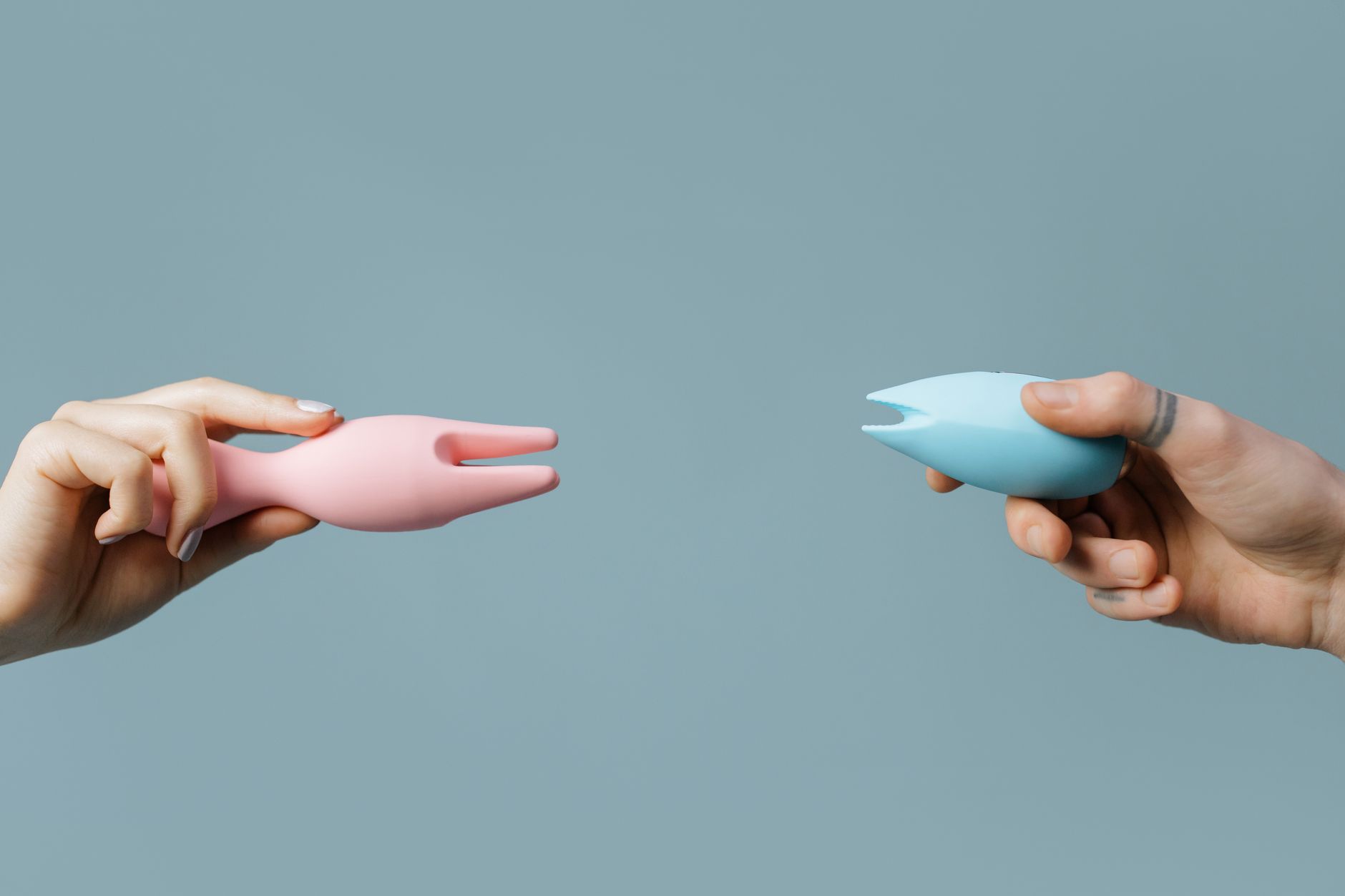
Your new partner wants to touch you. They're attentive, they care, and they have no idea what actually works. You could spend an hour explaining the exact pressure, rhythm, and location. Or you could hand them a lemon vibrator and let your body do the talking.
A lemon clitoral vibrator isn't just a solo toy. It's a communication device. When your partner knows little about your pleasure map, using lemon vibrators together compresses months of awkward trial-and-error into minutes of actual discovery.
Research on couples and sexual communication shows that the first 6 to 12 months of a new relationship set the tone for how vulnerable people feel about their bodies long-term. If you spend that time faking it, overexplaining, or apologizing for what you need, you're wiring your nervous system for shame. If you instead say "let's explore this together," you're building a foundation of radical honesty.
That second version is wildly harder. It requires you to speak up before resentment builds. It requires your partner to listen without defensiveness. And it requires a tool that takes the pressure off both of you to "get it right" the first time.
Here's what happens when you introduce a lemon vibrator to a partner who's still learning your body: the focus moves away from what they're doing wrong and onto what you both are discovering together.
Instead of "Your fingers are too rough" or "That spot doesn't feel like anything," you're saying "I want to show you something." The vibrator becomes a third participant in the conversation, neutral and external. It's not about their technique failing. It's about gathering data.
This matters because most people (regardless of gender) are terrified of being a bad lover. They carry this fear quietly and it makes them defensive. A lemon vibrator sidesteps that entire dynamic by making pleasure mechanical and explorable rather than personal and judged.
Say it out loud: "I want to use this so we can figure out what my body actually responds to." Notice how that reframes the entire experience. You're not criticizing. You're inviting.
"I've been using lemon vibrators for a while and they feel amazing. I want to show you what I like." This assumes consent and positions it as a gift to your partner, not a fix.
"I realized I don't think you've ever seen me orgasm. I want that to change." Direct, vulnerable, and clear.
"I get in my head about performance when we're together. This helps me actually feel good and stops me spiraling." This gives your partner permission to relax too.
Avoid: "I can't orgasm with you" or "You're not doing it right." Both trigger defensiveness and frame pleasure as a failure rather than a discovery.
The best conversations happen outside the bedroom first. You're not asking permission. You're sharing information about yourself. Bring it up when you're both relaxed. "Hey, I've been thinking about introducing my lemon vibrator to what we do together. I want you to see what makes me feel good." Then let your partner respond. They might say yes immediately. They might need to think about it. Both reactions are fine.
Once you've had the conversation, the first time you use a lemon clitoral vibrator together is its own mini-event. Treat it that way.
First: slow exposure. You use it solo in front of your partner while they're just present. No touching required. This lets them see your face, hear your breathing, and watch how your body responds. It's intimate without being demanding of them. Most partners find this unexpectedly hot, and you get to feel what your pleasure looks like without performance pressure.
Second: hand it over. Let your partner hold the vibrator while you guide their hand. This is where communication gets real. Say things like "move it left," "slower," "stay there." They get to feel the vibration and observe what position makes you moan. They're learning your body in real time.
Third: shared control. Take turns holding the lemon vibrator. You control it on them, they control it on you. This creates reciprocity and removes the role where one person is always the giver and the other always receives.
None of these need to lead to penetration or orgasm. They're about information gathering. The goal is for your partner to see the visible, audible difference between what makes you feel okay and what makes you feel incredible. That's data they'll carry forward into every touch.
Once your partner has watched you with a lemon vibrator, they understand pressure differently. They see that you don't respond to firm, constant pressure but to varied rhythm and precise location. They notice that you tense up when you're self-conscious and relax into pleasure when you're not performing. They watch your breathing change and your body language shift.
Then, later, when they're touching you without a vibrator, they have a reference point. They remember the rhythm. They remember the location. They remember how your face looked when you were actually present instead of anxious.
This is where couples pleasure actually deepens. Not because the vibrator is magic, but because your partner now has evidence of what your pleasure looks like. They can anticipate. They can offer exactly what you responded to before.
Many partners also tell me that once they've seen their person with a lemon vibrator, they feel less threatened by it. It's not replacing them. It's showing them exactly how to do their job better.
Sometimes a partner feels uncomfortable. "I want to be enough for you." This is insecurity dressed up as romance. The reframe: "You are enough. This is extra. This is play. This is exploration. You're here." If they can't move past it, that's information too. You're not compatible around pleasure, and that's a conversation worth having early.
Sometimes you feel awkward showing your body this way. That's normal. The antidote is remembering that your pleasure matters as much as theirs does. You're not being selfish by wanting to feel good. You're being mature by communicating what that looks like.
Sometimes the vibrator doesn't work the way you expected during partnered sex because you're more distracted or because the angle is different. This is fine. You can find the right intensity setting separately and come back to partnered use another time. Pleasure isn't linear.
Once you've introduced a lemon vibrator as a communication tool, it becomes a permanent part of your sexual language. Your partner now knows they can ask "Should we use the vibrator tonight?" without it feeling like criticism. You can ask for it without shame.
Over time, using lemon clitoral vibrators together becomes shorthand for "let's remember what we both like" or "I need to feel good right now." It's honest. It's focused. It sidesteps the performance anxiety that kills intimacy.
Most importantly, you've taught your partner that your pleasure is worth attention. You've given them the roadmap. You've made it safe to ask. That foundation changes everything about how your relationship evolves sexually over time.
Your partner is learning your body. Let them use all the tools you have to get there.
This is the fear that stops most people from introducing toys. Here's the truth: a lemon vibrator has nothing to do with attraction and everything to do with physiology. Your body responds to specific sensations. That's not about your partner's worth. Many people find it actually increases attraction because they get to see their partner fully relaxed and in pleasure. Frame it clearly: "This has nothing to do with you and everything to do with me feeling good while you're here."
It works both ways. Some people use a lemon clitoral vibrator during penetration. Some use it before to make sure they're ready. Some use it after because they haven't orgasmed yet. The key is finding the angle that works with your partner's body and yours. It might take experimentation. That experimentation is part of the bonding.
Pay attention to enthusiasm, not just consent. If your partner seems reluctant, that's worth discussing. "I notice you seem hesitant. What's actually happening for you?" might reveal insecurity, discomfort with toys, or something else entirely. Don't use a lemon vibrator as a way to prove your partner loves you. Use it only if you both genuinely want to explore together. If there's only agreement-without-enthusiasm, skip it and focus on the conversation itself.
Performance pressure can absolutely interfere with pleasure, even when your partner is being supportive. Start by using the vibrator solo or with your partner present but not watching intensely. You can also use it under blankets so there's less visibility. Remember that reaching orgasm isn't the goal here. The goal is for your partner to see what makes you feel good. If orgasm happens, great. If it doesn't, the learning still happened.
Yes. If your partner has difficulty with arousal or sensation, a lemon vibrator can actually help them learn what does work for their body, just like it helps you. The reciprocal learning is valuable. How lemon vibrators help when your partner has sensitivity issues breaks this down in detail.
There's no "should." Use it when it serves you both. Some couples use one frequently. Others use it occasionally. Some use it during the learning phase and then less often once they've built the knowledge. Let it be a tool that fits your rhythm, not an obligation.
A new partner doesn't know your body. They can spend months guessing or weeks learning with intention. A lemon vibrator collapses that timeline. It gives your partner permission to stop worrying about whether they're doing it "right" and start paying attention to what actually happens when you feel good.